
Finding Harrisburg Residents by Record
Use Harrisburg's record system as a map, not as one master roll. A current parcel question belongs with Dauphin County Tax Assessment. A dated transfer belongs with the Recorder of Deeds. A family question may be better answered by an older city directory, an estate file, or an archival vital index. The record date matters as much as the name. A property account can identify a current recorded owner, while an old directory can place a person at an address in its publication year.
Start with the most durable detail already known. For Harrisburg, that is often a complete street address, a date range, a full or variant name, or a Uniform Parcel Identifier, called a UPI. Keep recorded owner, tax mailing address, party to a filing, and directory occupant as separate facts. None of those labels supplies a complete household list.
- Search Dauphin Property Tax Inquiry by owner, parcel, or a normalized address. Save the Property ID or UPI and the dated deed reference.
- Use the UPI, name, instrument number, or book and page in the Recorder's Acclaim index to test the transaction trail.
- For a historical household, check the actual year volume held by the Historical Society of Dauphin County.
- Confirm a court, estate, or vital event through its named custodian and the specific docket or certificate route.
- When no online index has the requested existing record, make a narrow written request to the City, county office, archive, or library that holds it.
Harrisburg Resident Records Custodians
Harrisburg is both the state capital and the Dauphin County seat, so a local records search crosses municipal, county, and state offices. The county assessment office holds the current parcel account. The Recorder keeps recorded land documents. The Register of Wills and Clerk of Orphans' Court handles estate and marriage paths, while the Prothonotary is the county civil-filing office. The statewide UJS portal supplies public docket information, but each court office remains the source for its official file.
Dauphin County Recorder of Deeds
101 Market Street, Room 102
Harrisburg, PA 17101
717-780-6560
Public Acclaim record search
Dauphin County Tax Assessment
2 South Second Street, second floor
Harrisburg, PA 17101
717-780-6101
Dauphin Property Tax Inquiry
Dauphin Registration and Elections
1251 South 28th Street
Harrisburg, PA 17111
717-780-6360
Pennsylvania voter-status search
Harrisburg Parcel Records Lead to Deeds
For an address-based Harrisburg record search, the county property form is the useful first stop. It accepts a parcel number with or without dashes, an owner name as printed on the tax bill, or a bare house number and street name. The County specifically advises leaving off directional prefixes and street suffixes when using the street field. Its result can show the current owner, tax mailing address, property or situs address, assessment data, property characteristics, a deed reference, and the UPI.
A tax mailing address is a contact address for the assessment account. It can be a post-office box, business, estate, trust, attorney, or another location. The situs is the parcel's location. Neither field proves who occupies every unit or who lived there in a prior year. The fuller address workflow belongs on the Harrisburg by-street directory page.
| Property search field | Use in Harrisburg | Format note |
|---|---|---|
| Parcel Number | Find the durable county property key | Dashes are optional. |
| Owner Name | Find a tax account by owner | Use the last name as printed on the tax bill. |
| House Number and Street Name | Begin from a site address | Use the bare number and street, without direction or suffix. |
| Sale fields | Narrow a dated transfer search | Price and date ranges are available. |
| Municipality or Neighborhood | Refine a county result set | These are advanced criteria, not residency filters. |
See the Dauphin Property Tax Inquiry form before entering a search. The image below shows the official property search interface used to start a Harrisburg parcel trail.
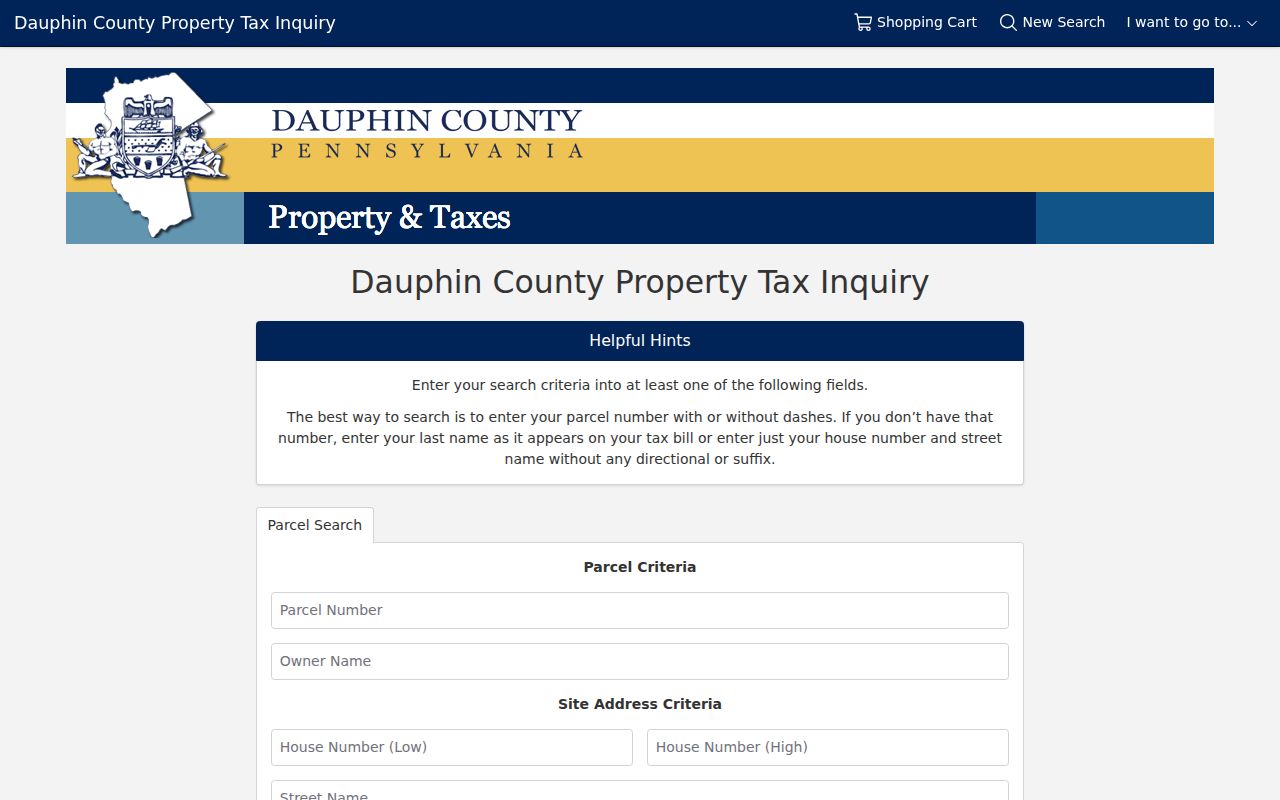
Once a UPI is recorded, Acclaim and the county GIS viewer provide the next record channels. The property form itself remains a current assessment tool, not a historic household directory.
Harrisburg's Recorded Deed Trail
The Recorder's public Acclaim system gives Harrisburg a long recorded-property trail. Dauphin County states that deeds and miscellaneous documents run from 1785 to the present, while mortgages run from 1979 to the present. Acclaim offers Simple Search, Name, Instrument Number, Document Type, Book and Page, Record Date, Consideration, UPI Number, Municipality or Comments, and Alpha Index routes.
Use an address result to get the UPI, then locate the recorded transfer by UPI or its deed reference. A deed's parties, recording date, legal description, consideration where shown, and earlier book, page, or instrument reference can establish a dated transaction. They do not establish current occupancy. The office states that official records remain with the Recorder; its FAQ also notes that recorded documents are public except military discharge papers.
The public Acclaim search is shown here. Its name search asks for a last name, comma, then first name, and the help requires at least three characters.
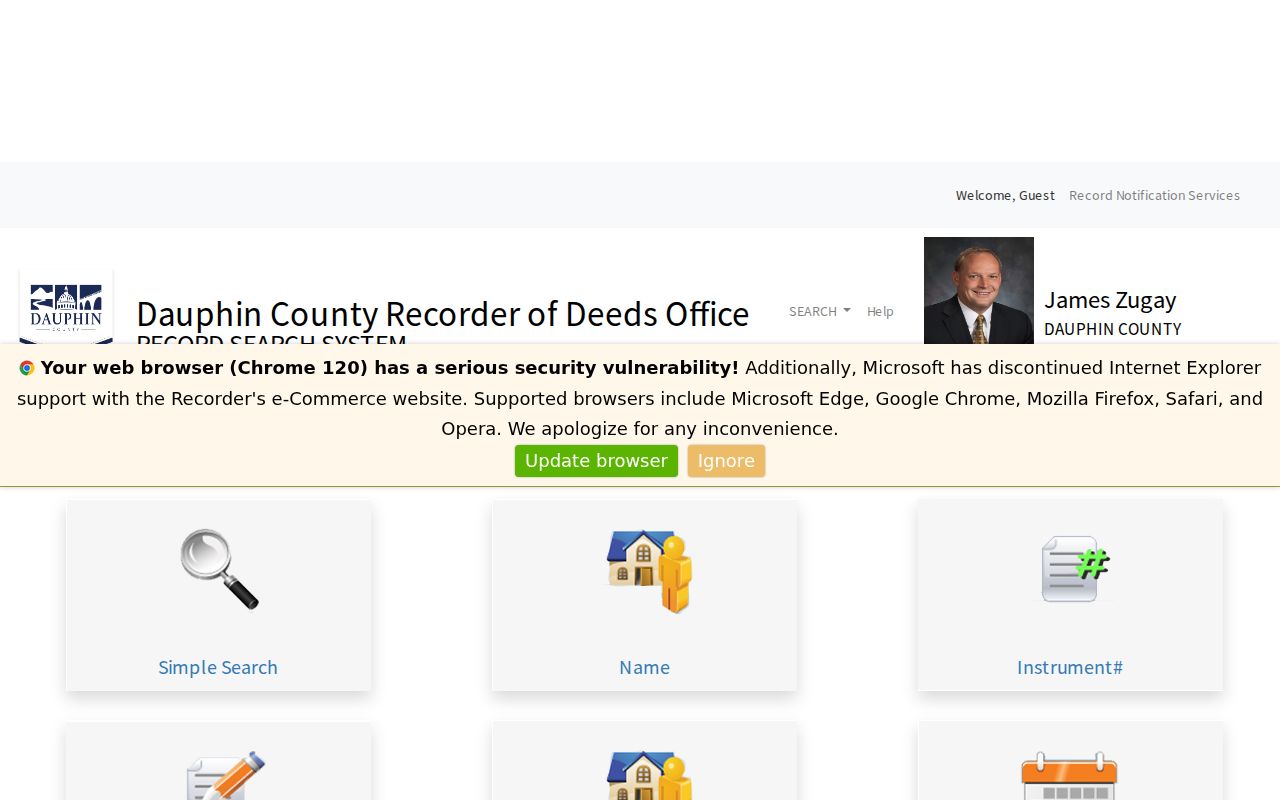
For a Harrisburg title question, follow each recorded transfer one at a time and compare the legal description and UPI. A repeated street number can be misleading when an address changes form.
Harrisburg Court Names Need Verification
A court docket can be a useful dated lead in Harrisburg research, but it is never a complete identity answer. Pennsylvania UJS Case Search covers public docket information for the Dauphin County Court of Common Pleas and Magisterial District Courts. Search modes include case number, participant, organization, offense tracking, police incident or complaint number, and State ID. Advanced filters can include a County selection, participant name, date of birth, filing dates, docket type, category, and status.
Match more than a surname. Compare the docket number, court, county, filing date, party role, and event history against another source. Juvenile, expunged, limited-access, and some civil matters may not display, and a docket sheet is not the whole case file. The county Prothonotary has a separate civil case search, but warns that its case-system transition leaves some records unavailable online.
The UJS search screen is pictured here. It is a public docket route, not a substitute for asking the relevant court custodian for an official file or copy.
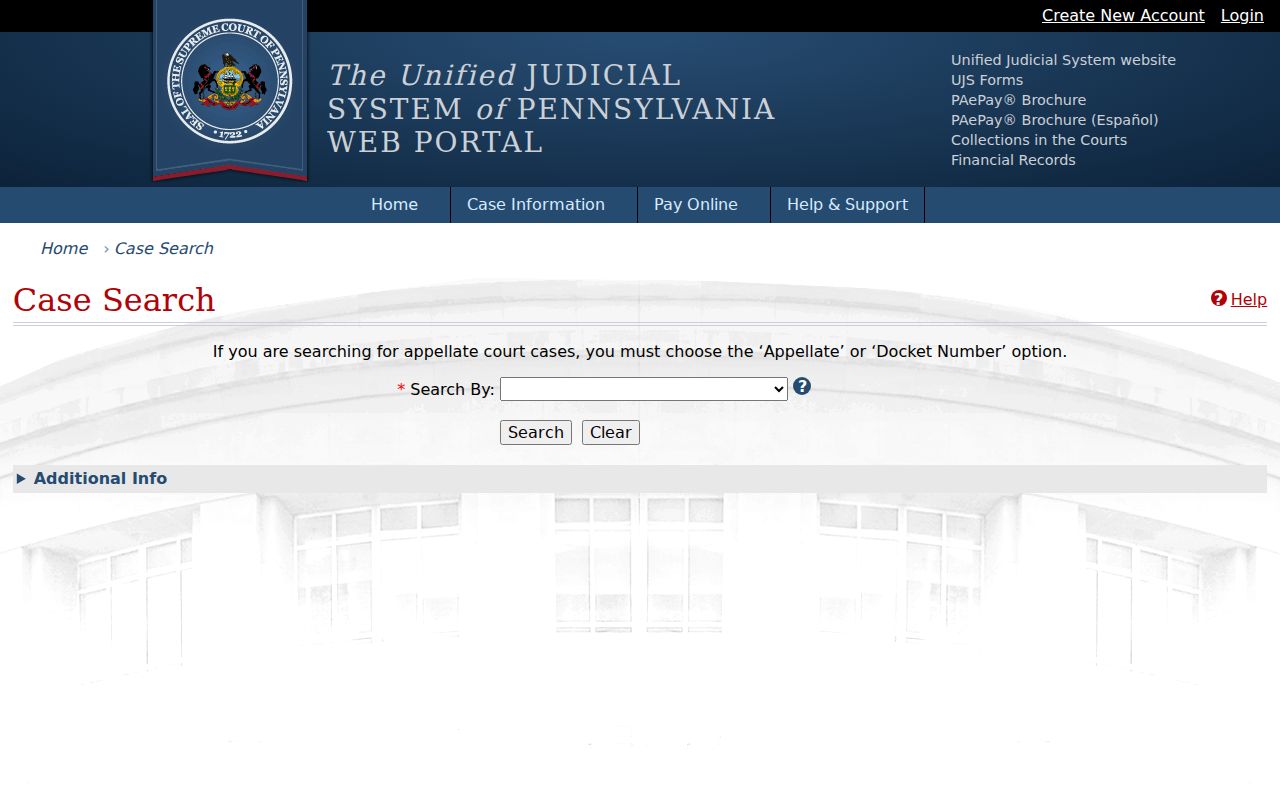
Use the public result as a record locator. The correct court or clerk controls paper-file access, copying, certification, and protected material. The county's separate Civil Court Public Access search is shown below and is an additional, not interchangeable, route.
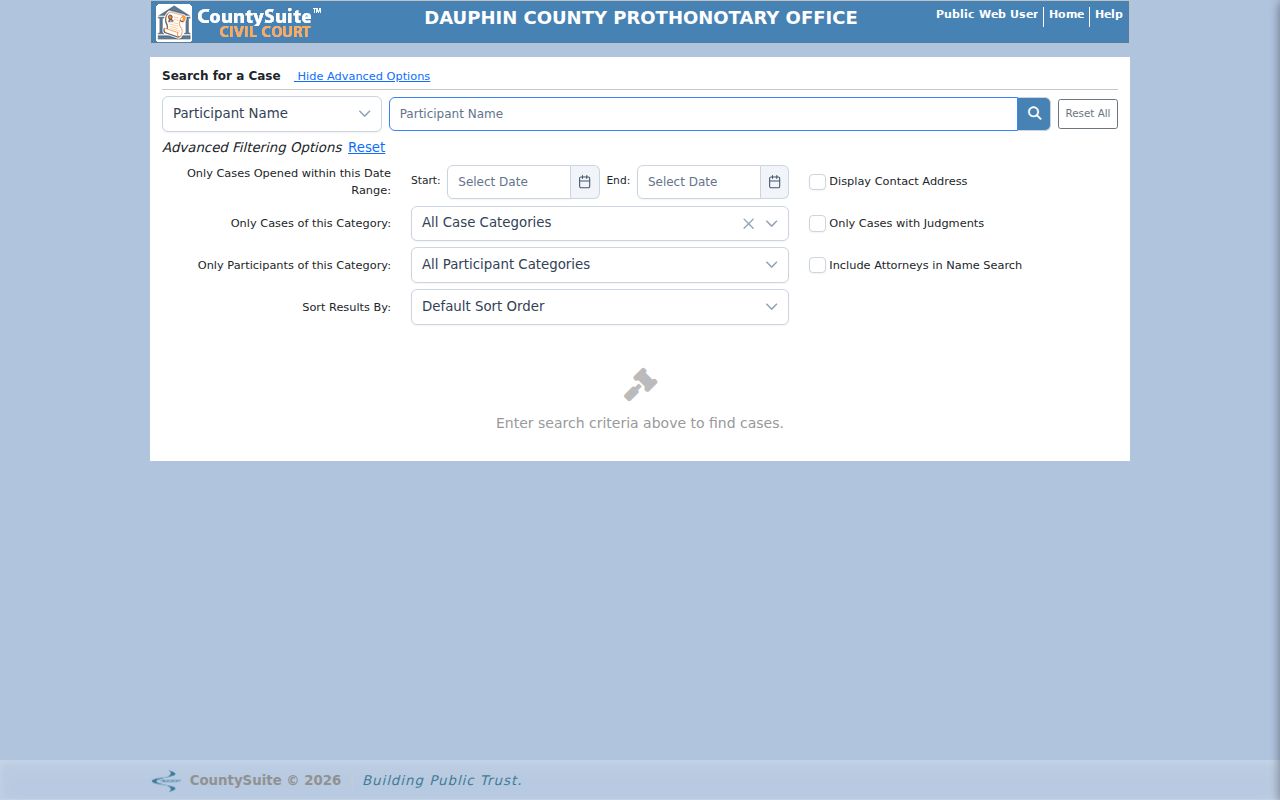
Its case-management transition may leave some records unavailable online. Ask the Prothonotary or other named custodian about a particular record rather than assuming a no-result is final.
Harrisburg Voter Status Has Limits
The state Find Voter Registration Status tool lets a voter check registration, ballot request, or polling-place information. It is not a general people list or a browse-by-street roll. Dauphin County Registration and Elections is the path for current office procedures, and fuller voter-file access is governed by Pennsylvania Election Code, 25 P.S. § 1207, and the Department's request rules.
The official status search shown below is intentionally narrow. A lack of a result does not prove that someone did not live at an address. A person may not be registered, may have moved, may have changed data, or may have protected information. Voter records also do not reveal how someone voted.
Use the official voter-status page only for its stated purpose. It should not be used to assemble a block list or to probe a neighbor's identity.
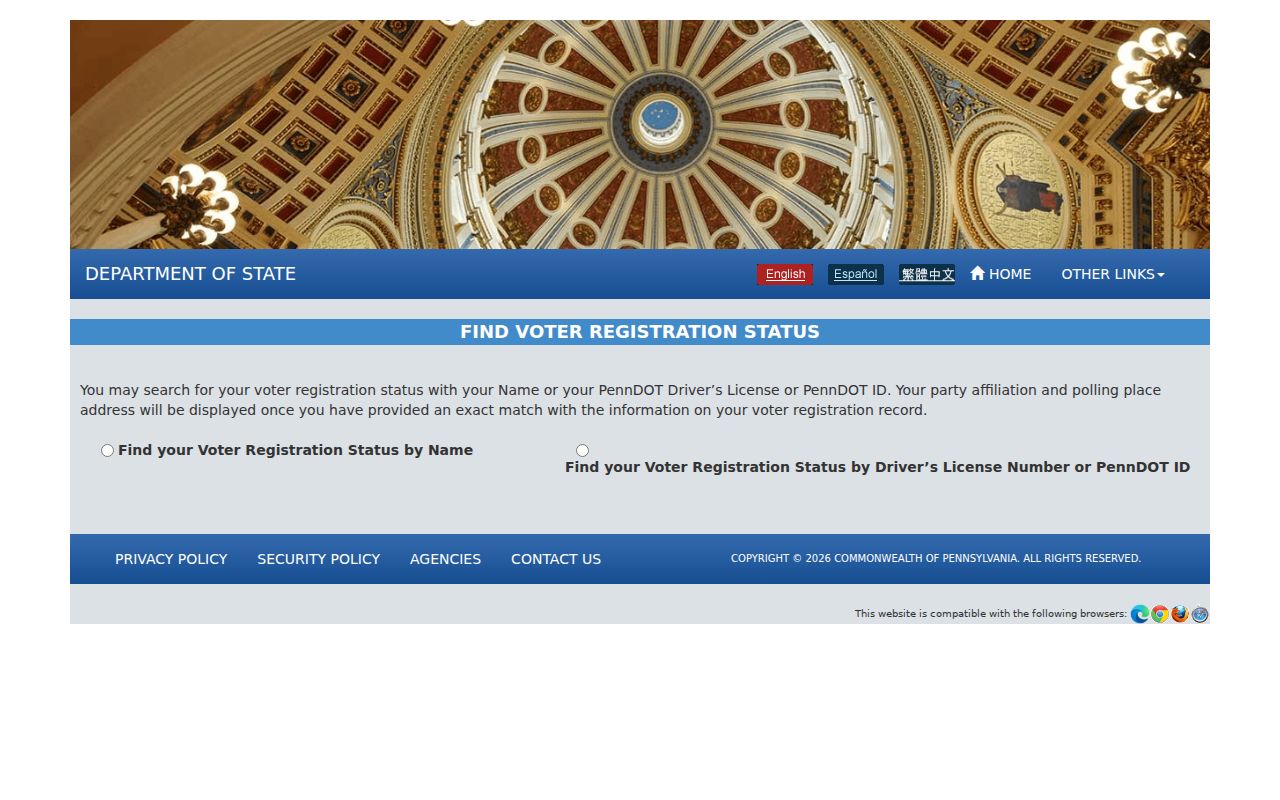
For election administration questions, the county office is the appropriate channel. The personal-status form does not turn an address into a public household roster.
Current Harrisburg Residents Directory Sources
Each current Harrisburg source answers a limited question. Property accounts identify an owner of record and an account mailing address. The deed index identifies parties to recorded documents. Court dockets identify parties to public cases. The voter form is a self-status channel, not a public name-and-address browser. A careful search uses the right source, dates the result, and states only what that source supports.
| Source | Who It Lists | Keeper | Access |
|---|---|---|---|
| Property Tax Inquiry | Current recorded owner and assessment account | Dauphin Tax Assessment | Public portal or office inspection |
| Acclaim recorded index | Parties to deeds, mortgages, and instruments | Dauphin Recorder | Public index; copy terms require confirmation |
| UJS Case Search | Parties to public docket material | Pennsylvania judiciary | Free public docket route with exclusions |
| Register Cloud Search | Estate, marriage, and public Orphans' Court paths | Dauphin Register of Wills | Online search plus office route |
| Voter-status tool | A voter's own registration status | Pennsylvania and Dauphin Elections | Self-status use, not address browsing |
When the goal is to confirm one person across dated records, use a one-person verification workflow rather than treating a single index hit as proof. A current official result and a past directory entry can both be true while describing different periods.
Harrisburg Addresses Do Not List Households
One of the most important Harrisburg record limits is the owner-versus-occupant distinction. An assessment record can show the current owner, mailing address, situs address, UPI, assessed value, and property details. An owner can be a trust, estate, organization, or person with a separate mailing address. A recorded deed identifies people connected to a transaction, not everyone who lives at the property.
Renters, adult relatives, guests, utility customers, delivery recipients, protected voters, and people using the Pennsylvania Address Confidentiality Program may not appear in a public address record. Driver and vehicle personal information is protected by federal law. Public information must be used lawfully and never to threaten, stalk, harass, or harm someone.
Note: The Pennsylvania Address Confidentiality Program can provide eligible participants a substitute address, so an official absence may be a protection rather than an error.
Harrisburg Official Records and Commercial Listings
Official Harrisburg records have a named custodian, a defined scope, and a way to verify a detail at the source. Commercial people-finder listings can be incomplete, stale, or based on unclear collection methods. A name-and-address match from any source needs a date and an independent check before it is treated as a fact.
| Official custodian record | Commercial people-finder listing |
|---|---|
| Names the office responsible for the index and record. | May not identify the underlying source or update date. |
| Can be checked against a parcel, deed, docket, or directory volume. | May combine records for people with similar names. |
| Has stated public-access and confidentiality limits. | May omit those limits or reproduce outdated details. |
For family history, estate work, a property question, or reconnecting with someone, begin with a custodian record and retain its date and identifier. That approach makes a Harrisburg result easier to check and correct.
Harrisburg Vital Records Have Two Paths
Birth and death records for Harrisburg events from 1906 forward are held by the Pennsylvania Department of Health Division of Vital Records. Certified access has eligibility and identity rules. Older material follows a different route: birth certificates become public 105 years after the year of birth and death certificates after 50 years. The State Archives provides non-certified archival copies, while the Department issues certified copies.
The Archives says it holds original births from 1906 through 1920 and deaths from 1906 through 1975, with a $5 archival-copy fee that remains due if a search fails. For pre-1906 family research, the Dauphin Register of Wills and Clerk of Orphans' Court is the local county-register route, and marriage records follow the county office rather than the state birth-and-death system.
Use the Pennsylvania vital-record genealogy guidance to choose a historic route. A vital index establishes a dated event or family lead, not a current Harrisburg address.
Harrisburg City Files Have an Offline Route
Harrisburg's Bureau of Codes can be an address-history source for permits, inspections, zoning-linked material, property complaints, and related files. The research found no verified public citywide permit-history database. That gap matters. A map or search page should not be described as if it contains every permit or every person connected to an address.
For an existing City-held record, the City Right-to-Know request form offers electronic copies, printed copies, or in-person inspection. Give the office a precise record type, address or party, and time frame. The City Solicitor's Right-to-Know desk is at 10 North Second Street, Suite 402, Harrisburg, PA 17101, with email at righttoknow@harrisburgpa.gov and phone 717-255-3065.
The Pennsylvania Right-to-Know Law, Act 3 of 2008, 65 P.S. §§ 67.101–67.3104, requests existing records rather than a newly compiled resident list. An agency generally responds within five business days under § 67.901, subject to a written extension and lawful redactions.
Harrisburg Historical Directory Shelves
Harrisburg's historical directory layer is unusually specific. The Historical Society of Dauphin County lists Harrisburg volumes for 1839, 1842, 1843, 1852, 1856, 1858, 1860, 1863–64, 1866–67, 1869, 1871–1947, 1949–1956, 1958–1976, 1979–1982, and 1986–1999. Those breaks are evidence. Do not fill a missing year by assuming annual coverage.
HSDC says its directories are alphabetical listings of residents and businesses that usually give a name, address, and occupation. Some include a second street-number arrangement, often called a criss-cross or reverse directory. The HSDC library is at 219 South Front Street, Harrisburg, PA 17104, and lists 717-233-3462. Some volumes also include Steelton or Middletown, so read the volume's place heading before assigning an entry to Harrisburg.
- Roll
- A list maintained for a particular administrative purpose, not a list of every resident.
- Index
- A finding system that points to a record, often without reproducing the complete document.
- Criss-cross directory
- A street-number arrangement that can lead from an address to a listed name in selected volumes.
- Parcel
- A mapped piece of property identified in county land and assessment systems.
Harrisburg Maps Test Address Changes
Historic maps add a local check when a Harrisburg record result appears to change. The City's March 2026 house-history and Sanborn guide points to 1884, 1890, 1905, and 1929 editions. It gives a concrete example: current 107–109 Cumberland appears as 109–111 on the 1890 map. That is an address-specific warning, not a license to claim a citywide renumbering year.
The digitized Library of Congress Sanborn volume covers 1929 through November 1950 in 106 sheets. It can show a structure, street layout, and land use, but it does not name every resident. Pair a map with the correct directory year, deed legal description, municipal context, and archive material.
Harrisburg Official Searches Have Different Roles
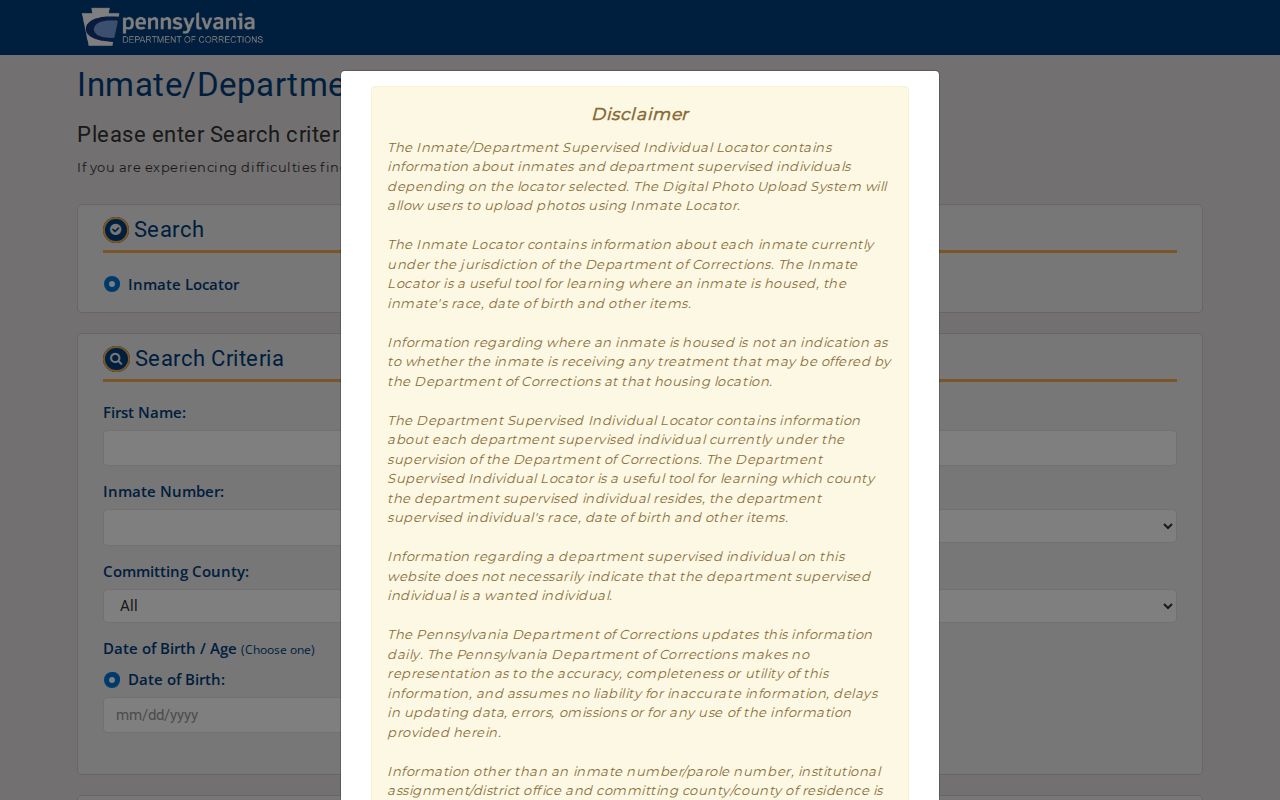
Harrisburg research can also require several narrowly focused statewide systems. The Pennsylvania DOC inmate and parolee locator is for state custody or supervision, not a county-jail or federal-custody answer. A name match must be verified with the system's identifiers and current status. Federal and Dauphin County custody have separate official paths.
This state locator screen illustrates the distinction. It does not make a legal, personal, or family conclusion from a name search.
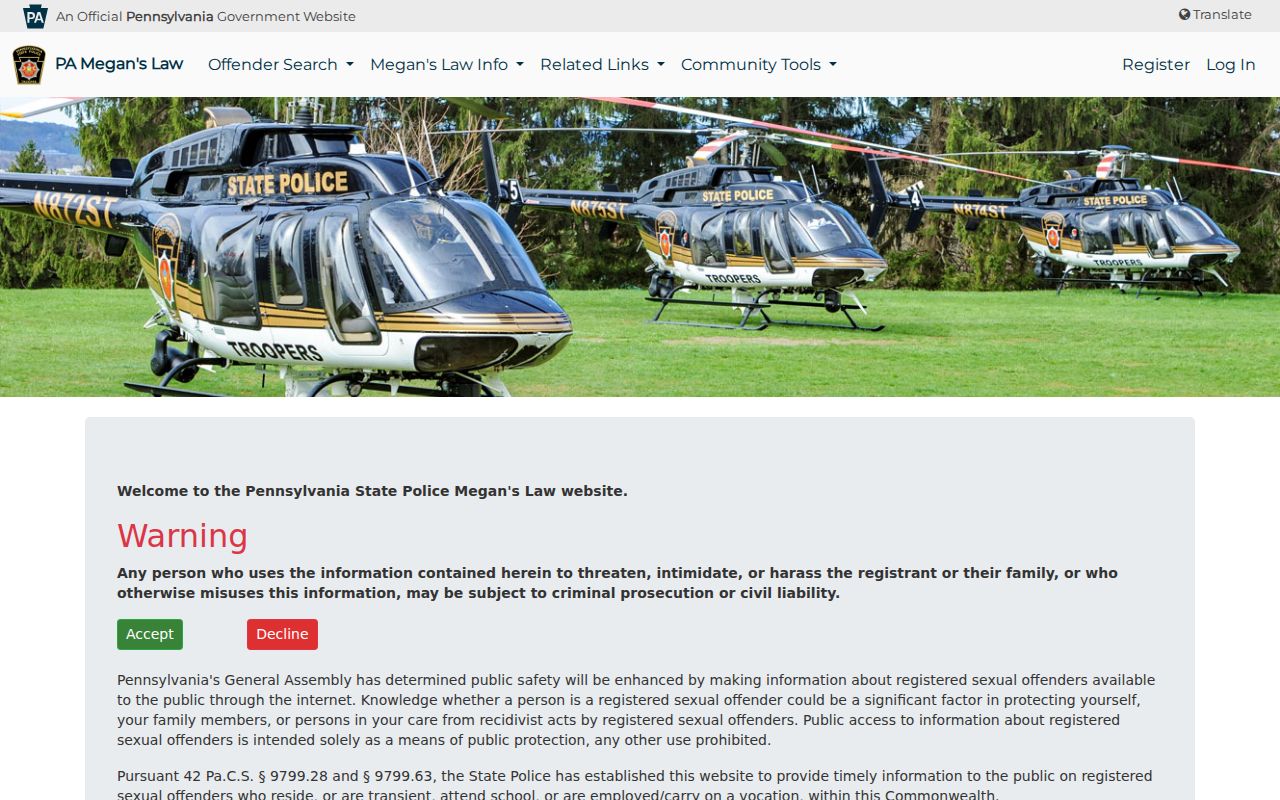
The Pennsylvania State Police Megan's Law public website is another distinct statutory registry. Follow its notices and public-safety restrictions; a registry result is not a broad measure of danger, household composition, or residence certainty.
Each official system has its own scope. Do not use any record result to single out, embarrass, intimidate, or harm a person.
Harrisburg Recorder Alerts Support Caution
Dauphin County's Recorder Record Notification Service sends email alerts when a recorded document is associated with a property, name, or parcel number. Registration has four steps. The service can give an owner a prompt notice of a recording, but it does not prevent deed fraud, prove ownership, or replace reviewing the underlying record.
That distinction matters because Pennsylvania authorities have recently warned about forged-property-transfer schemes and impersonation calls. Independently locate the Recorder, court, prison, or agency contact instead of responding to an incoming request for a transfer, gift card, cryptocurrency, or payment-app payment. For a suspected recorder issue, call the Recorder at 717-780-6560 and preserve the message or document.
Historical Harrisburg Residents Directory Records
Printed directories are dated evidence for Harrisburg residents, not a modern contact list. The Historical Society of Dauphin County's volumes are the strongest verified local collection. The alphabetical pages can give a name, address, and usually an occupation. A selected volume's street-number arrangement can instead begin with the address. Read the spelling, abbreviations, city heading, and exact publication year from the book before using an entry.
The Historical Society's archives also holds roughly 900 manuscript groups, including family, government, school, church, organizational, map, deed, photograph, and newspaper material. The Dauphin County Library System maintains onsite Harrisburg city-directory microfilm for 1861–1901 at East Shore Area Library. The full collections, genuine gaps, and household-tracing method appear on the Harrisburg city directories page.